
Table of Contents
- Understanding Tenor Guitar Body Shapes and Sound
- Tenor Guitar Sizes: O-Body, Grande Concert, and Dreadnought
- Best Tenor Guitar Body Style for Fingerpicking
- Solid Wood vs Laminate Tenor Guitar Construction
- Craven 0-26T vs Blueridge BR-40T: Materials and Tone
- How Body Shape Affects Tenor Guitar Tone and Playability
- Choosing Your Tenor Guitar Body Shape
- Frequently Asked Questions
Last Updated: October 5, 2026
Understanding Tenor Guitar Body Shapes and Sound
A tenor guitar body shape fundamentally determines how the instrument sounds, feels in your hands, and projects on stage. At Craven Tenor Guitars, we’ve spent years refining our understanding of how body design influences every aspect of the playing experience, from the warmth of the tone to the comfort of reaching the upper frets.
The relationship between body size, wood selection, and tonal character isn’t accidental. It’s the result of deliberate engineering. A compact O-body produces intimate, focused tones ideal for fingerpicking in close settings. A Grande Concert with cutaway access opens up upper-fret playability. A true dreadnought delivers projection and volume that carries across larger venues.
What separates a tenor guitar that feels right from one that doesn’t often comes down to this single factor: understanding which body shape matches your playing style, musical context, and physical comfort. This guide walks you through the three primary tenor guitar body shapes, explains how each affects tone and playability, and helps you choose the design that serves your music best.
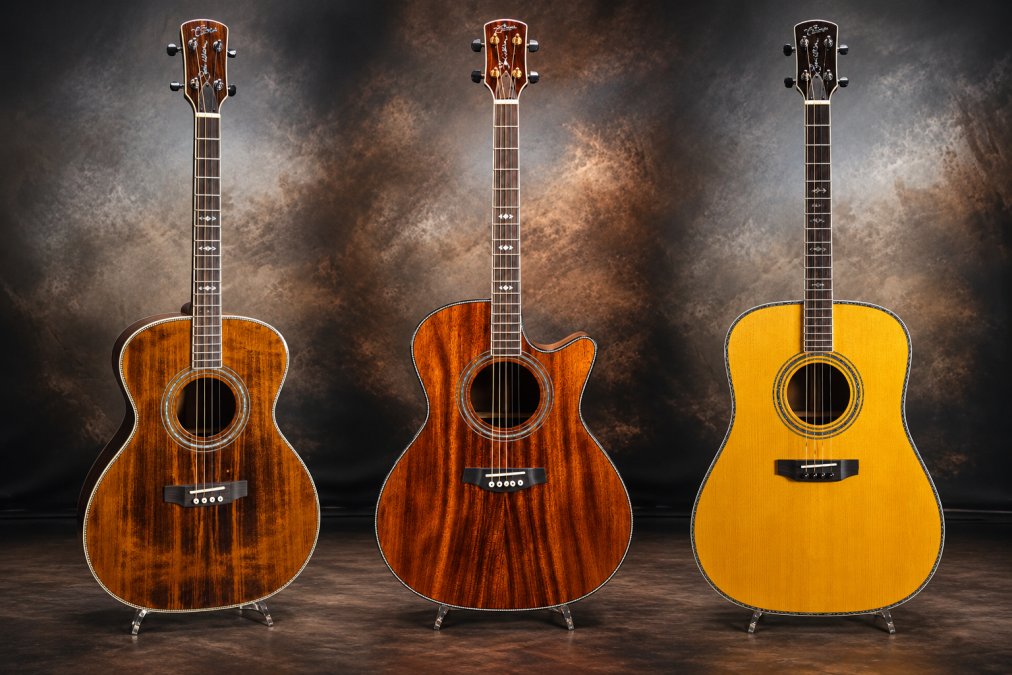
Tenor Guitar Sizes: O-Body, Grande Concert, and Dreadnought
Three distinct body sizes dominate the tenor guitar landscape, each with its own tonal signature and practical advantages. Understanding the differences between them is essential before committing to an instrument.

Comparison diagram of tenor guitar body shapes including O-body, Grande Concert, and dreadnought designs.
O-Body: Compact Design and Warm Tone
The O-body is the smallest of the three, with a body depth of approximately 9.5 cm and overall dimensions that fit comfortably against a seated player. This compact footprint makes the O-body the go-to choice for fingerpickers who prioritize intimacy and portability.
The O-body’s warmth comes from its proportions. The smaller air chamber resonates at frequencies that emphasize the midrange and bass response, creating a tone that feels full and round despite the instrument’s size.
Comfort is another major advantage. The narrow waist and compact outline mean less reach required to access the upper frets. For players with smaller hands or those who tire easily during long sets, the O-body removes a common pain point.
The trade-off is projection. An O-body won’t fill a large room the way a dreadnought will. If you’re playing amplified sets or recording with a microphone, this limitation disappears.
Grande Concert: Cutaway Access and Balanced Sound
The Grande Concert sits between the O-body and dreadnought in overall dimensions, with a body depth around 10.8 cm. What sets it apart is the cutaway design, a notch carved into the upper bout that provides unobstructed access to frets 12 and beyond.
This body shape delivers a balanced tone that borrows warmth from the O-body while adding slightly more projection than a compact design allows.
The cutaway is transformative for players who need upper-fret access without sacrificing body comfort. You get the playability advantage of a larger instrument without the weight and depth penalty.
Tonally, the Grande Concert’s slightly larger air chamber compared to the O-body produces a bit more sustain and resonance. The sound carries further without becoming harsh or thin. It’s the “Goldilocks” choice for musicians who refuse to compromise between comfort and tonal presence.
Dreadnought: Full-Size Projection and Volume
The dreadnought is the largest tenor guitar body shape, with depths approaching 12 cm and a full, squared-off outline. This is the only true dreadnought tenor made by Craven Tenor Guitars, and it’s built for musicians who prioritize projection and volume above all else.
A dreadnought tenor delivers commanding presence. The larger air chamber resonates with more power, producing louder dynamics and greater sustain. On stage without amplification, a dreadnought cuts through the mix.
The physical trade-off is real. A dreadnought requires more reach to the upper frets. Seated players may find the body depth creates an awkward playing angle. For standing performance or players with larger frames, these concerns disappear. For marathon fingerpicking sessions, the dreadnought’s size can become fatiguing.
Dreadnoughts excel in contexts where acoustic power matters: large venues, outdoor performance, ensemble settings, and recordings where you want the tenor guitar to anchor the sound rather than sit delicately on top.
Best Tenor Guitar Body Style for Fingerpicking
For fingerpicking, the O-body and Grande Concert dominate. Fingerpicking requires precision, sustained upper-fret access, and the ability to play for extended periods without fatigue. The O-body’s compact design and the Grande Concert’s cutaway both serve these needs exceptionally well.
The O-body wins for pure fingerpicking comfort in intimate settings. The smaller waist means less hand travel between bass and treble strings. The compact body sits naturally against your torso, reducing the need for awkward arm positioning.
The Grande Concert becomes the better choice if your fingerpicking includes upper-fret work or if you play in venues larger than a living room. The cutaway access is a game-changer for players who move between lower bass notes and higher melodic lines without repositioning the instrument.
A dreadnought can work for fingerpicking, but it’s not ideal. The larger body and deeper waist create more reach, which slows down hand movement and increases fatigue during long sessions.
Solid Wood vs Laminate Tenor Guitar Construction
The materials used to build a tenor guitar body determine its tonal ceiling and long-term durability. This is where construction quality becomes inseparable from sound quality.
Solid wood tenor guitars use one-piece or multi-piece solid wood for the top, back, and sides. The wood vibrates freely, transmitting subtle tonal nuances and responding dynamically to how hard or softly you play. Solid wood also ages, developing a richer tone over time.
Laminate construction uses a thin veneer of tonewoods bonded to a plywood or composite core. This approach offers stability. Laminates resist humidity fluctuations and temperature swings, making them ideal for touring musicians or players in unstable climates. The trade-off is tonal ceiling; laminate bodies generally produce a less complex and resonant sound compared to solid wood.
Many budget-conscious manufacturers use laminate construction because it’s cheaper and faster to produce.
At Craven Tenor Guitars, we build exclusively with solid woods. This commitment means higher material costs and longer production timelines, but it’s essential for achieving superior tone and resonance.
Craven 0-26T vs Blueridge BR-40T: Materials and Tone
The difference between the Craven 0-26T and the Blueridge BR-40T illustrates why material selection matters more than you might expect.
The Craven 0-26T is built with a torrefied Sitka spruce top paired with yellow walnut sides and back. Torrefaction is a heat-treatment process that ages the wood artificially, creating a deeper, warmer foundation before the instrument is even played.
This combination produces a tenor guitar with warm, clear voicing. The tone is present and articulate, you hear every note distinctly, while the foundation remains rich and inviting. This contrasts with the bright, somewhat banjo-like shrillness often found in laminate-bodied tenor guitars.
The Blueridge BR-40T, by contrast, uses laminate construction throughout. The bright, thin tone characteristic of laminate bodies becomes immediately apparent.
This isn’t a matter of preference. It’s a structural difference. Solid wood vibrates as a unified system, allowing for greater harmonic complexity and dynamic response. Laminate construction dampens vibration, reducing tonal complexity and responsiveness.
For players serious about tone, whether in the studio or on stage, the material difference translates to a more satisfying musical experience. The Craven 0-26T’s warm, clear voicing is the result of deliberate material choices, not luck or marketing.
How Body Shape Affects Tenor Guitar Tone and Playability
Body shape influences tone in three measurable ways: air chamber volume, body outline, and structural mass.
A larger air chamber (dreadnought) produces more resonance and louder overall volume. The sound travels further and sustains longer.
Body outline, the width of the waist, the depth of the bout, affects how the wood panels vibrate. A narrower waist (O-body) concentrates vibration energy, producing tighter, more defined tones.
Structural mass matters too. Thicker wood and larger body dimensions mean the instrument can sustain vibration longer without dampening. This translates to longer note decay and richer harmonic content.
Playability is equally affected. A compact O-body with a narrow waist requires less hand travel and arm repositioning. You can play faster, more intricate passages with less fatigue.
The cutaway design of the Grande Concert changes playability dramatically by removing the physical barrier to upper-fret access.
Choosing Your Tenor Guitar Body Shape
Start with your primary playing context. Will you be performing in intimate venues, recording in a studio, or playing large halls? Will you sit or stand? How important is portability?
If you prioritize comfort and play primarily fingerstyle in close settings, the O-body is your answer.
Material selection matters as much as body shape. Solid wood construction, like that found in Craven Tenor Guitars, offers superior tonal qualities and longevity.
At Craven Tenor Guitars, we’ve engineered each body shape to maximize the potential of solid wood construction.
The tenor guitar you choose today should be an instrument you’ll play for decades. Body shape determines whether that instrument feels natural in your hands and sounds like an extension of your voice.
Choosing the right tenor guitar body shape is one of the most important decisions a musician makes.
Frequently Asked Questions
What is a tenor guitar tuned to?
Tenor guitars are typically tuned DGBE, one octave lower than a standard soprano ukulele. This tuning sits between a soprano ukulele and a baritone ukulele in pitch. Some players tune tenor guitars to CFAD or GDAE depending on their playing style and musical preference. The tuning affects how the body shape resonates and projects sound, making body construction and size choices important for achieving your desired tonal range.
How does a tenor guitar body shape affect its sound?
Body shape directly influences tone, projection, and resonance. Smaller bodies like the O-body produce warm, focused tones ideal for fingerpicking and intimate performances. Larger bodies like the dreadnought deliver greater volume and bass response for stage projection. The waist width, body depth, and overall outline determine how sound waves resonate inside the instrument. Materials matter equally: torrefied Sitka spruce tops paired with yellow walnut sides and backs create warm, clear voicing, while laminate construction produces thinner, brighter tones that lack depth.
Which tenor guitar body shape is best for fingerpicking?
The O-body and Grande Concert cutaway designs excel for fingerpicking. Their compact size and narrow waist offer superior comfort and upper-fret access, allowing your fingers to move freely across the neck. The O-body’s smaller dimensions create a warm, articulate tone that responds well to individual finger strikes. The Grande Concert cutaway provides similar playability with added projection. Both designs let fingerpicking technique shine without the overwhelming volume of a dreadnought, making them ideal for singer-songwriters and studio recording.
What is the difference between an O-body and a Grande Concert tenor guitar?
The O-body is the most compact tenor guitar size, delivering intimate warm tone and maximum playing comfort. The Grande Concert cutaway is larger with a single cutaway design that improves upper-fret access for lead playing and solos. The O-body excels for fingerpicking and folk styles, while the Grande Concert balances size with playability for musicians who need reach up the neck. Both offer superior comfort compared to full-size dreadnoughts, but the Grande Concert provides more body resonance and projection due to its larger outline and body depth.
Are dreadnought tenor guitars larger than other tenor guitar body types?
Yes, dreadnoughts are the largest tenor guitar body style. They feature a deeper body, wider waist, and greater overall dimensions than O-body and Grande Concert designs. This larger construction delivers maximum volume, bass response, and sustain, making dreadnoughts ideal for stage performance and ensemble playing. The trade-off is reduced playing comfort and upper-fret access compared to smaller bodies. If you prioritize projection and full-bodied sound over portability and fingerpicking ease, a dreadnought tenor guitar is the right choice.
Why does wood selection matter more than body shape alone?
Wood species and construction method create the foundational tone that body shape then amplifies. Torrefied Sitka spruce tops with yellow walnut sides and backs produce warm, clear, full-voiced tone with natural sustain. Standard laminate construction creates bright, thin tones lacking resonance and depth. Premium solid woods age and develop richer character over years of playing, while laminates remain static. When comparing tenor guitars, solid wood construction with high-quality species delivers the tonal excellence and lifetime playability that serious musicians invest in, regardless of whether you choose an O-body, Grande Concert, or dreadnought shape.
Can I try a tenor guitar before buying to hear the difference between body shapes?
Playing different body shapes in person is the best way to understand how size, waist width, and construction affect comfort and tone. Visit retailers or music venues where you can hold and play O-body, Grande Concert, and dreadnought models side by side. Listen for differences in projection, warmth, and clarity. Consider your playing style: fingerpickers often prefer compact bodies, while stage performers may need dreadnought projection. If ordering a handcrafted instrument, discuss your musical goals with the maker to ensure the body shape and wood selection match your needs before committing to your purchase.
