
Table of Contents
- Why Handmade Guitars Demand Specialized Care
- Routine Cleaning After Playing Your Handmade Guitar
- How to Clean an Acoustic Guitar’s Fretboard and Finish
- Guitar Humidity Control: Protecting Wood and Tone
- Guitar Storage Tips and Temperature Management
- Guitar Setup and Maintenance: When to DIY and When to Call a Luthier
- Creating a Maintenance Schedule and Record Keeping
- Frequently Asked Questions
Last Updated: October 9, 2026
Why Handmade Guitars Demand Specialized Care
Handmade guitars are fundamentally different from mass-produced instruments. Each one is built by skilled craftspeople who select premium woods, carefully shape every component, and hand-finish the instrument to exacting standards.
The wood used in handmade guitars is more responsive than factory-grade materials. It’s also more vulnerable to environmental stress.
Most players underestimate how much their daily habits affect long-term guitar health. A few minutes of care after each playing session prevents problems that would otherwise require expensive repairs.

Routine Cleaning After Playing Your Handmade Guitar
The moment you finish playing is the best time to clean your handmade guitar. Sweat from your hands, dust from the environment, and moisture from the air settle on the wood. Left untouched, these deposits build up and can eventually affect the finish and the wood’s ability to vibrate freely.
Wiping down the body, neck, and headstock
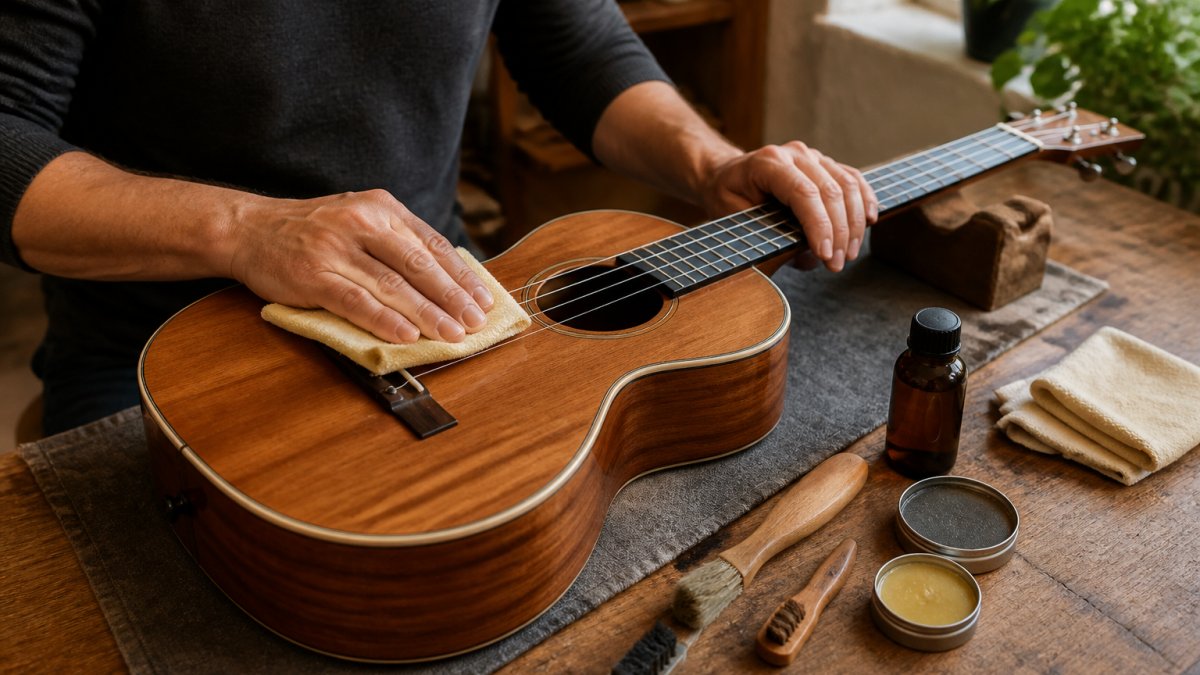
Start with a dry, soft cloth, microfiber works best because it doesn’t scratch. Wipe the entire body in the direction of the wood grain. Pay attention to the curves where dust collects. Move to the neck and headstock, wiping each string and the areas between them.
This simple step removes sweat and fingerprints before they have time to set into the finish. Do this after every playing session, even if you only played for ten minutes. It takes less than a minute and prevents cumulative damage.
Removing dust and debris from hard-to-reach areas
Dust settles in the sound hole, around the bridge, and in the frets. Use a soft brush or a dry cloth rolled into a point to reach these spots. Never use compressed air, the pressure can force debris deeper into the instrument or damage delicate components.
For the frets, a slightly damp cloth works better than a dry one. Wipe each fret individually, moving from the headstock toward the body. This removes the grime that builds up from playing and prevents it from affecting your tone.
How to Clean an Acoustic Guitar’s Fretboard and Finish
The fretboard and finish are the two most visible parts of your handmade guitar, and they’re also the most exposed to damage. Proper cleaning keeps them looking beautiful and protects the wood underneath.
Choosing the right oils and cleaning products
Not all cleaning products are safe for handmade guitars. Many commercial cleaners contain silicone or other chemicals that build up over time and can damage the finish.
Lemon oil is popular, but use it sparingly, once every few months at most. Too much oil creates a sticky surface that attracts dust. For regular cleaning, a dry cloth is actually your best tool. For occasional conditioning, look for products labeled as safe for guitar finishes.
Test any product on a hidden area first. If it darkens the wood or leaves a residue, stop using it immediately.
Conditioning the fretboard safely
The fretboard dries out over time, especially in low-humidity environments. A dry fretboard can develop cracks or become uncomfortable to play. Conditioning it helps restore flexibility and playability.
Apply a small amount of fretboard conditioner with a soft cloth. Work it in using gentle circular motions. Wipe away any excess with a clean, dry cloth. This should be done every six months to a year, depending on your climate.
Never soak the fretboard or apply oil to the sides of the frets where it can run down and affect the finish. Keep conditioning to the playing surface only.
Polishing and protecting the finish
The finish on a handmade guitar is part of its character. It protects the wood and contributes to the instrument’s tone. Keeping it clean and protected ensures both durability and appearance.
Use a soft, dry cloth for regular polishing. For deeper cleaning, a slightly damp cloth works, but dry the guitar immediately afterward. Avoid wax-based polishes, they can build up and dull the finish over time.
If your guitar has a natural finish (no glossy coating), treat it with extra care. Natural finishes are more porous and absorb moisture more readily. Wipe it down more frequently and keep it away from humid environments.
Guitar Humidity Control: Protecting Wood and Tone
Wood responds dramatically to humidity changes. Too dry, and the wood shrinks, causing cracks and fret sprout (frets sticking out above the fretboard). Too humid, and the wood swells, warping the neck and making the action (string height) too high. Consistent care remains the most effective strategy for managing humidity levels, a principle that extends beyond instruments to the preservation of delicate inlay furniture.
Why 45% to 55% relative humidity matters
The ideal range for handmade guitars is 45% to 55% relative humidity. This is the sweet spot where the wood remains stable and the instrument maintains its playability and tone. Most homes fluctuate outside this range, especially in winter when heating dries the air and in summer when humidity spikes.
Maintaining this range is one of the most important things you can do for a handmade guitar. It’s more critical than any cleaning product or polishing technique.
Monitoring and adjusting humidity seasonally
Invest in a hygrometer, a device that measures relative humidity. Place it near your guitar and check it weekly. This simple tool gives you visibility into whether your environment is helping or hurting your instrument.
In winter, when indoor heating dries the air, use a humidifier. A small room humidifier near your guitar case works well. In summer, when humidity rises, ensure good air circulation and avoid storing the guitar in damp basements or attics.
If you notice changes in how the guitar plays, higher action, fret buzz, or a warped neck, humidity imbalance is often the culprit. Correcting the humidity usually fixes the problem without needing professional repair.
Guitar Storage Tips and Temperature Management
Where and how you store your handmade guitar matters as much as how you clean it. Poor storage conditions can undo months of careful maintenance.
Using a guitar case and avoiding environmental extremes
Always use a quality guitar case when the guitar isn’t being played. A case protects against physical damage, dust, and environmental fluctuations.
Store the case in a stable environment. Avoid attics, basements, garages, and cars, where temperature and humidity swing wildly. A climate-controlled closet or room is ideal. Never leave a guitar in direct sunlight or near a heat source like a radiator.
Temperature extremes are as damaging as humidity swings. Rapid temperature changes cause the wood to expand and contract unevenly, leading to cracks and warping. Keep your guitar in an environment where the temperature stays relatively constant.
Safe transport and acclimatization
When you travel with your handmade guitar, give it time to adjust to a new environment before playing it. If you bring a guitar from a cold car into a warm room, condensation can form on the wood. Leave it in its case for 30 minutes to an hour to let the temperature stabilize.
The same principle applies when moving between climates. If you’re traveling to a significantly different humidity level, acclimatize the guitar gradually. This gives the wood time to adjust without cracking.
During transport, keep the guitar secure. A loose instrument in a vehicle can slide around and suffer impact damage. Use a case with padding and secure it so it won’t shift.
Guitar Setup and Maintenance: When to DIY and When to Call a Luthier
Some maintenance tasks are safe to do yourself. Others require professional expertise. Knowing the difference prevents costly mistakes.
String replacement and basic adjustments
Replacing strings is a straightforward task you can handle at home. Remove the old strings, clean the fretboard while it’s exposed, and install new ones. Take your time, proper string installation keeps the guitar in tune longer.
Basic truss rod adjustments are trickier. The truss rod controls neck relief (the slight curve in the neck). Small adjustments can fix fret buzz or high action, but mistakes can cause permanent damage. If your guitar has fret buzz or the action is too high, consult a luthier instead of attempting adjustments yourself.
Recognizing when professional help is needed
Some problems demand professional attention. If you see cracks in the wood, a warped neck, or separation at the seams, stop playing and contact a luthier. These issues won’t resolve on their own and will worsen without professional repair.
If the action becomes too high or too low despite proper humidity control, the neck may have shifted. A luthier can assess the damage and recommend repairs. If the bridge is lifting or the finish is cracking, professional restoration is necessary.
A skilled luthier who specializes in handmade guitars understands the nuances of custom-built instruments. They know how to preserve the instrument’s character while restoring functionality. This expertise is worth the cost.
Creating a Maintenance Schedule and Record Keeping
Consistency prevents problems. A simple maintenance schedule ensures you’re doing the right things at the right intervals.
Daily maintenance:
- Wipe down the body, neck, and headstock with a soft cloth after playing
Monthly maintenance:
- Check humidity levels with a hygrometer
- Inspect the finish for dust or debris buildup
- Examine the strings for wear or corrosion
Quarterly maintenance:
- Deep clean the fretboard with a slightly damp cloth
- Inspect the bridge and seams for any separation
- Check the truss rod for signs of neck movement
Annually:
- Condition the fretboard with a safe product
- Have a luthier inspect the guitar for hidden damage
- Replace strings if they show wear
Keep a simple log of what you’ve done and when. Note any changes in how the guitar plays or sounds. If a problem develops, this record helps a luthier diagnose the issue faster.
| Maintenance Task | Frequency | Time Required | Why It Matters |
|---|---|---|---|
| Wipe down after playing | After each session | 1-2 minutes | Removes sweat and dust before they damage the finish |
| Check humidity | Weekly | 1 minute | Prevents wood damage from environmental stress |
| Clean fretboard | Monthly | 5 minutes | Maintains playability and prevents buildup |
| Condition fretboard | Every 6-12 months | 5 minutes | Keeps wood flexible and prevents cracks |
| Professional inspection | Annually | 30-60 minutes | Catches hidden damage before it worsens |
| String replacement | As needed (6-12 months) | 20-30 minutes | Maintains tone and playability |
The commitment to maintain handmade guitars is an investment in the instrument’s future. The steps are simple: clean after playing, monitor humidity, store properly, and know when to call a professional. Wood care fundamentals from the Guitar Preservation Society and Environmental standards for musical instruments provide additional technical guidance if you want to deepen your knowledge.
Frequently Asked Questions
How often should you clean a handmade guitar?
Wipe down your handmade guitar with a soft cloth immediately after playing to remove sweat, oils, and dust from the strings, body, and neck. Deep cleaning of the fretboard and finish should happen monthly or every 20-30 hours of playing time. Regular care prevents buildup and keeps your instrument sounding its best while protecting the premium woods used in handcrafted guitars.
What humidity level is best for an acoustic guitar?
Maintain relative humidity between 45% and 55% for your handmade guitar. Wood expands and contracts outside this range, causing cracks, fret sprout, and tonal changes. Use a hygrometer to monitor humidity in your storage area. In dry seasons, use a room humidifier or place a humidifier inside the guitar case. In humid conditions, use a dehumidifier to protect the wood and finish.
How should you store a handmade guitar when not in use?
Always store your handmade guitar in its case to protect it from dust, temperature fluctuations, and accidental damage. Keep the case in a climate-controlled environment away from direct sunlight, heat sources, and damp areas. Stand the case upright or lay it flat on a stable surface. Before storing for extended periods, ensure the guitar has acclimated to the storage environment for 24-48 hours to avoid stress on the wood.
Can temperature changes damage a handmade guitar?
Yes. Extreme temperature swings cause the wood in your handmade guitar to expand and contract, leading to cracks, warping, and finish damage. Avoid storing your guitar near heating vents, air conditioning units, or windows with direct sunlight. Maintain a stable temperature between 18°C and 24°C. When traveling, allow your guitar to acclimate gradually to a new environment before playing it, especially after exposure to significant temperature changes.
