
Table of Contents
- Why Acacia Wood Tenor Guitars Stand Out
- Acacia vs Mahogany Tenor Guitar: Which Wood Delivers Better Tone
- Solid Acacia Tenor Guitar Construction and Why It Matters
- The Role of the Tenor Guitar Soundboard in Acacia Instruments
- Custom Tenor Guitar Wood Selection: Crafting Your Ideal Instrument
- What to Look for When Buying an Acacia Tenor Guitar
- Acacia Tenor Guitars for Beginners and Experienced Players
- Conclusion
- Frequently Asked Questions
Last Updated: October 18, 2026
Why Acacia Wood Tenor Guitars Stand Out
Acacia wood has earned its reputation among serious musicians for reasons beyond aesthetics. An acacia wood tenor guitar is engineered for warmth, projection, and tonal complexity, and its density and grain structure create resonance patterns that develop character over years of playing.
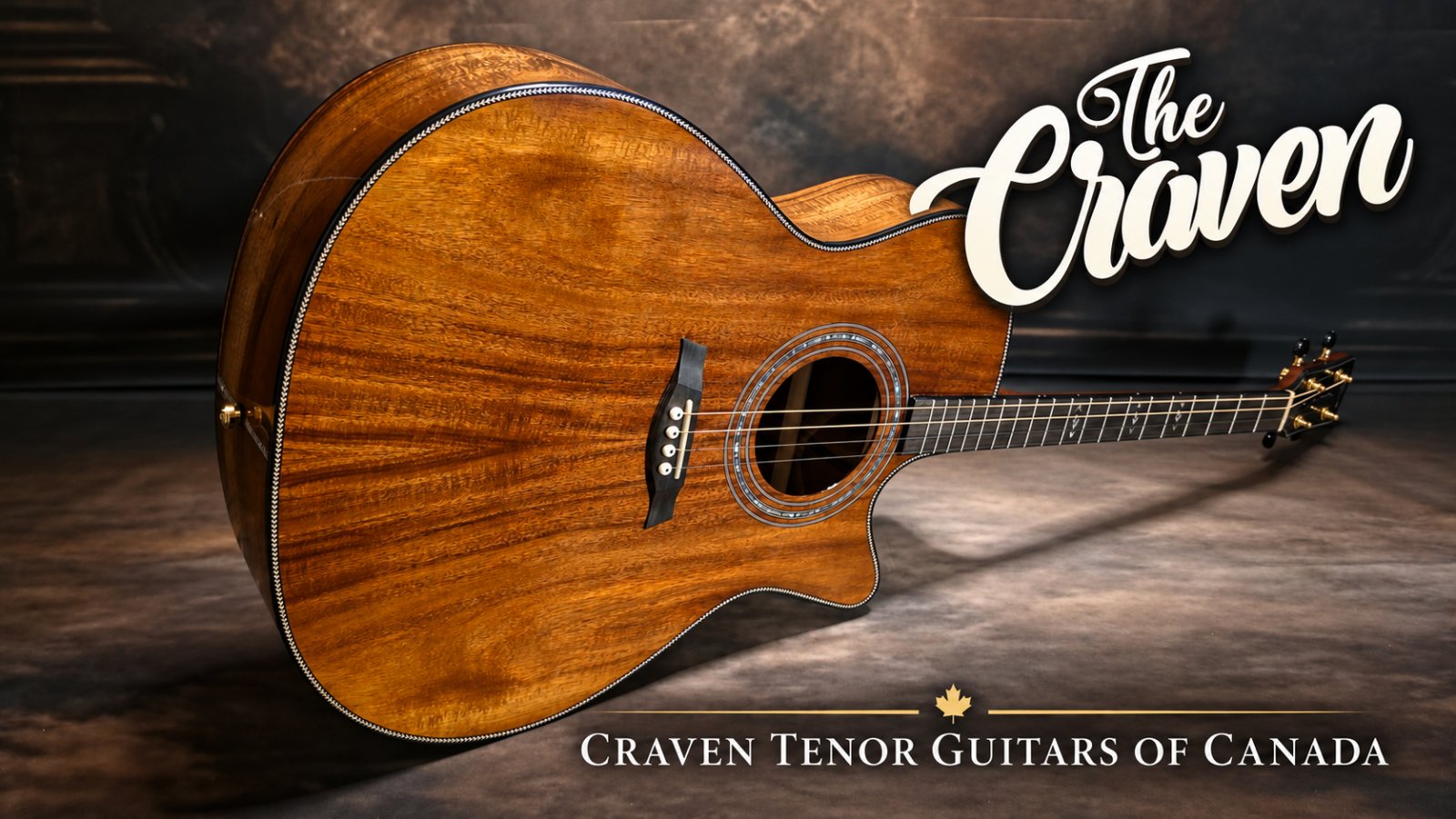
At Craven Tenor Guitars, we’ve chosen acacia for our Grande Acacia model precisely because it delivers what touring musicians and session players demand: a fuller tone that cuts through in ensemble settings without sacrificing intimacy in solo work. Unlike mass-produced instruments built for warehouse distribution, each acacia tenor guitar we craft uses hand-selected soundboards chosen for their specific acoustic properties.
Acacia’s tight grain structure means fewer surprises as the instrument ages. The tonal character deepens with time rather than shifting unpredictably, which matters when you rely on your instrument for professional work.
Acacia vs Mahogany Tenor Guitar: Which Wood Delivers Better Tone
The choice between acacia and mahogany shapes the entire personality of your tenor guitar. Both are premium tonewoods, but they serve different musical intentions, and choosing well starts with understanding why they sound different.
Acacia is dense and hard, with tight, interlocking grain. That density lets the soundboard resist deformation under string tension and vibrate with a quick, articulate response, while low natural damping transfers string energy efficiently into the air. The result is strong projection, clear note separation, and a bright but controlled top end that emphasizes the fundamental and upper midrange, so it cuts through in a mix or on stage.
Mahogany is softer and less dense, with an open, porous grain. It damps higher frequencies and emphasizes the lower midrange, giving it characteristic warmth and a slightly compressed, forgiving feel under the fingers, which suits fingerstyle players who want a rounded, intimate voice.
The trade-off is straightforward: mahogany sounds intimate and rounded; acacia sounds defined and carries further. Neither is objectively superior. The right choice depends on your playing style and the venues where your instrument lives.
|
Characteristic |
Acacia |
Mahogany |
|---|---|---|
|
Tonal Character |
Bright, articulate, projecting |
Warm, mellow, intimate |
|
Best For |
Live performance, recording, rock/contemporary |
Fingerstyle, folk, introspective work |
|
Stability |
Highly stable as it ages |
Stable with proper care |
|
Visual Appeal |
Rich golden to deep brown |
Reddish-brown warmth |
|
Playability Feel |
Responsive, quick note definition |
Smooth, forgiving response |
Many players who own both keep an acacia tenor guitar for ensemble and stage work and a mahogany instrument for solo or recording sessions where warmth is the priority. Neither wood is a compromise; they are different tools for different musical jobs.
Solid Acacia Tenor Guitar Construction and Why It Matters
When we describe a tenor guitar as “solid acacia,” we mean the back, sides, and top are all cut from acacia wood rather than using acacia as a veneer over cheaper materials. This construction choice defines the instrument’s entire acoustic signature.
Solid construction means the wood vibrates as a unified system, with sound waves traveling through the body without composite layers or adhesive barriers that dampen resonance. The result is an instrument that sounds like itself, not like acacia layered over something else.
Limited-quantity production allows us to maintain this standard. We don’t compromise on construction to meet volume targets. Each solid acacia tenor guitar in our lineup goes through hand-crafting processes that ensure tonal consistency. The soundboard receives particular attention because it’s responsible for the majority of the instrument’s acoustic output.
Beginners sometimes wonder whether solid construction justifies the investment for casual playing. The honest answer: solid acacia builds value over time, and an instrument that sounds better and plays more responsively encourages longer practice sessions. For professional musicians and serious hobbyists, solid construction is the foundation of an instrument that will serve you for decades.
The Role of the Tenor Guitar Soundboard in Acacia Instruments
The soundboard is the engine of your tenor guitar‘s tone. In acacia instruments, the soundboard’s role becomes even more critical because acacia’s natural brightness means every detail of the soundboard’s construction influences what you hear.
The soundboard amplifies and colors string vibration into the sound that reaches your ear. In acacia tenor guitars, a well-crafted soundboard translates the wood’s inherent clarity into musical articulation, while poor selection or construction can waste acacia’s potential and turn brightness into harshness.
This is why hand-selection matters. Our luthiers examine each potential soundboard for grain consistency, thickness variation, and acoustic response before committing it to an instrument. The goal is a soundboard that vibrates freely while maintaining structural integrity under string tension.
Acacia soundboards develop character as they age: the wood settles and stabilizes, and the tonal response deepens. An acacia tenor guitar played regularly will sound noticeably richer in year three than in year one, one of the defining pleasures of owning a premium instrument.
Custom Tenor Guitar Wood Selection: Crafting Your Ideal Instrument
When you commission a custom tenor guitar, wood selection becomes a conversation between you and the builder about the instrument you actually need.

The process begins with your priorities: stage presence, studio clarity, or fingerstyle intimacy? Do you play one style or move between genres? How much do visual aesthetics matter alongside tone? These questions guide the wood selection.
Craven Tenor Guitars offers multiple neck sizes and body configurations, O Body, Dreadnought, and Grande Acacia models, each with different acoustic properties. The Grande Acacia, for instance, provides more volume and projection than smaller body sizes, making it ideal for touring musicians who need their instrument to carry in various venues.
Custom selection also means choosing between acacia sources. Wood from different regions and growth conditions develops slightly different tonal characteristics, some leaning toward brightness and others offering more warmth while keeping acacia’s signature clarity. A builder familiar with these variations can match you with wood that aligns with your musical voice.
The limited-availability model protects this quality standard. We don’t maintain massive inventory waiting for buyers. Instead, we source wood thoughtfully for specific instruments, ensuring every tenor guitar receives the attention it deserves.
What to Look for When Buying an Acacia Tenor Guitar
Before you evaluate any instrument, confirm you are looking at a tenor guitar and not a tenor ukulele, which are frequently confused in search results and even some retailer listings.
Visit Craven Tenor Guitars today →
With that cleared up, here is what to evaluate.
Sound quality comes first. Play across the full range and listen for consistency in tone across all strings and positions.
Playability matters as much as tone. Check neck comfort by playing extended passages; fret spacing on a tenor guitar differs from standard guitars, and your hand needs to feel at home. Craven Tenor Guitars offers two neck sizes because hand size and preference vary.
Construction quality shows in details. Examine the neck-to-body joinery, check that frets are level and properly seated, and look for a consistent finish free of rush work.
Materials transparency matters. A builder should be able to tell you exactly what woods were used, where they came from, and why those specific pieces were chosen for your instrument.
Acoustic-electric options deserve consideration if you perform regularly. An undersaddle pickup or microphone system should amplify your instrument’s natural tone rather than coloring it.
Setup and strings are part of the purchase. Ask what strings the instrument ships with and whether the setup is adjusted for your preferred tuning, since string gauge affects tension and tone.
A verified shortlist helps. Rather than comparing dozens of loosely relevant listings, focus on instruments that state scale length, tuning, solid versus layered construction, and neck dimensions. Those four specifications tell you more about playability and tone than any marketing copy. Craven Tenor Guitars publishes these details for each model because buyers deserve to compare like with like.
Acacia Tenor Guitars for Beginners and Experienced Players
The question of whether a premium acacia tenor guitar makes sense for a beginner deserves a nuanced answer.
If you’re new to tenor guitars but committed to learning seriously, an acacia tenor guitar accelerates your development. Its responsiveness means your technique translates directly into sound quality, so you hear the results of proper technique immediately and build good habits faster.
If you’re casually exploring the tenor guitar to see whether it fits your musical life, starting with a more modest instrument makes financial sense. Once you’ve confirmed you’re playing regularly and enjoying it, upgrading to an acacia tenor guitar becomes an investment in your ongoing musical life.
For experienced players, the choice is simpler. You know what tone you want and how to extract it, and you’re ready to own something that will serve you for decades.
Professional touring musicians and session players generally gravitate toward acacia because the wood’s projection and clarity cut through in ensemble settings. Folk musicians and fingerstyle specialists sometimes prefer mahogany’s warmth. But these are tendencies, not rules; your playing style and musical voice matter more than genre categories.
The real question isn’t whether you’re experienced enough to deserve a premium instrument. If that commitment exists, an acacia tenor guitar from a builder like Craven Tenor Guitars makes sense regardless of your experience level.
Conclusion
Acacia wood tenor guitars represent a specific choice: prioritizing projection, clarity, and tonal stability. You’re investing in an instrument that will carry your music further and develop richer character as you play it.
The musicians who thrive with acacia tenor guitars are those who value responsiveness and definition. If you’re performing regularly, recording in studios, or playing styles where your instrument needs to cut through, acacia delivers. If you’re building a collection of instruments for different musical contexts, acacia fills the role of your projecting, articulate voice.
At Craven Tenor Guitars, we build acacia tenor guitars for musicians ready to commit to an instrument that commits to them. Our hand-crafted approach, limited availability, meticulous wood selection, and attention to every detail ensures that your tenor guitar becomes a lasting part of your musical life. Explore our Grande Acacia model and discover how premium soundboards and thoughtful craftsmanship create instruments that reward years of playing.
Choosing the right tenor guitar means finding an instrument that matches your musical voice and playing demands. An acacia wood tenor guitar from Craven Tenor Guitars delivers the tonal clarity, projection, and stability that serious musicians need. With hand-selected soundboards, two neck sizes for personalized comfort, and models including the O Body, Dreadnought, and Grande Acacia, you’ll find the instrument built specifically for your music.
Frequently Asked Questions
What does acacia wood sound like in a tenor guitar?
Acacia wood produces a warm, resonant tone with excellent sustain and clarity. The wood’s natural density creates a fuller sound character compared to lighter tonewoods, making it ideal for players seeking depth and projection in both acoustic and amplified settings. This tonal richness develops over time as the instrument ages, rewarding long-term ownership with increasingly complex resonance.
How does solid acacia compare with layered acacia in a tenor guitar?
Solid acacia construction uses premium wood throughout the back, sides, and soundboard, delivering consistent tonal response and superior durability. Layered or laminated acacia uses thinner acacia veneer over less expensive wood cores, which reduces cost but compromises resonance and long-term stability. For serious musicians and collectors, solid acacia represents the investment in authentic tone and lasting playability that defines handcrafted instruments.
Are acacia tenor guitars suitable for beginners?
Yes, acacia tenor guitars work well for beginners, though the investment differs from entry-level alternatives. Handcrafted acacia instruments offer superior playability with comfortable neck spacing and responsive action, making them easier to play accurately. Beginners who commit to learning benefit from the instrument’s exceptional tone, which provides musical reward and motivation. However, casual players may find mass-produced alternatives adequate for initial exploration.
What should I look for when buying an acacia tenor guitar?
Prioritize solid acacia construction, hand-selected wood grading, and expert craftsmanship over mass production. Examine neck comfort, fret spacing suited to your hand size, and available body sizes (O Body, Dreadnought, Grande). Listen for warm resonance, clear sustain, and balanced treble-to-bass response. Verify the builder’s reputation, available support, and customization options for wood selection and neck configuration to ensure the instrument matches your playing style and long-term musical goals.
